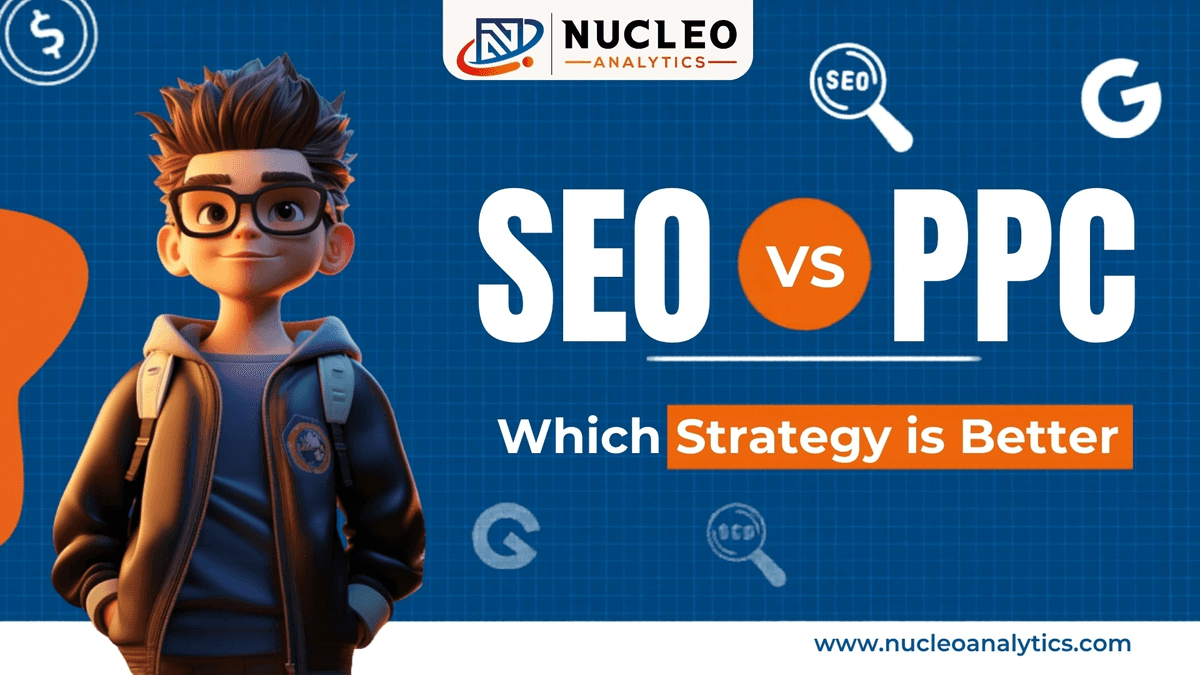
Most businesses hit this point sooner or later and start comparing SEO vs PPC because both can drive leads, visibility, and growth in very different ways. Understanding the role of SEO in digital marketing helps you see why one builds slowly while the other pushes results faster.
When you look closely at SEO vs Google Ads, the real difference comes down to timing, budget, and how quickly you need results.
Understanding SEO and How It Works
Let’s start with SEO because this is where most businesses build real momentum. SEO, or Search Engine Optimization, helps your website appear on Google without paying for every click. It brings organic traffic, steady visibility, and shows the importance of SEO when people start finding you naturally.
Think of it as long-term trust. The work you put in today keeps paying off later. Rank for the right terms, and people click, engage, and begin trusting your business while actively searching for what you offer.
What SEO Really Means
- Keyword research to find the words and phrases your customers are actually typing into search engines
- On-page optimization so your content tells search engines exactly what value you provide
- Technical SEO to make sure your website loads fast and can be crawled by search engines
- Content creation, so you have helpful answers for what people are searching for
- Link building, which means other sites pointing to your site, telling search engines you are trustworthy
Why SEO Matters
SEO matters for a few big reasons:
First, organic results tend to get more clicks than paid results. When people search for something, they tend to trust the results that show up naturally more than ads. A strong SEO presence builds credibility and helps you own real estate in search results.
Second, SEO helps in your overall presence online. Good SEO enhances your content, your website, and your message. This assists in other fields such as social media and email marketing since individuals locate you with a lot of ease.
Third, SEO is cost effective long term. You invest in content and optimization now, and the traffic you get later is essentially free. You do not pay every time someone clicks, as you do in PPC.
Local SEO for Businesses
Business owners who provide services to local customers need to implement local SEO because it serves as their primary digital marketing approach. Your business will appear in local searches when you optimize your website, Google Business Profile, and other online listings.
Local SEO delivers your business to customers who are ready to make purchases from nearby coffee shops, dentists, plumbers, and restaurants. Your business will receive immediate visibility when customers search for “best pizza near me.”
Technical SEO
Technical SEO is often overlooked, but it plays a much bigger role in your SEO strategy than you think. Speed, security, and crawlability are what get you noticed by search engines. Without it, all your efforts will be for nothing.
Site speed, mobile-friendliness, fixing broken links, and a clear site architecture all contribute to a robust technical SEO. This is what holds all your SEO efforts together.
B2B SEO Campaign
It is not an SEO campaign that is B2C but B2B. The B2B SEO implies that you will be selling to businesses, not to individuals. Building a business is not about winning fast; it is about establishing your presence in a particular industry. Real growth happens when you stop selling only to people who need your product or service and start connecting with people who genuinely want what you offer.
It does not make you money immediately, but it gives you leads from people who already believe you. If you want something that will keep paying off for you months down the line, then SEO is where you start.
It is slow, it takes time, and that is why some businesses run PPC while SEO gains traction.
Understanding PPC and How It Works
Now let’s talk about PPC. PPC stands for Pay Per Click advertising, which means you pay each time someone clicks your ad. It is the paid side of traffic, and it clearly shows the importance of PPC when speed matters and visibility cannot wait. Google Ads is the biggest platform, though plenty of businesses also use others.
PPC moves fast. Launch a campaign, get seen quickly, and start pulling in clicks almost immediately. If you need traffic right now, PPC gets your business in front of people without waiting.
What PPC Actually Does
PPC puts you right at the top. Bid on the keywords that matter, show up above organic results, and control exactly who sees your ads by location, device, time of day, or audience type. You can run Facebook or LinkedIn ads, too, but most people mean search engine PPC when they compare SEO vs Google Ads.
It is perfect for launches or when you need traffic fast. The right keywords get clicks, you pay per click, and every click is aimed at turning into real leads or paying customers.
PPC Conversion Tracking
PPC conversion tracking is everything. You need to see not just clicks but real action. Did someone buy? Fill out a form? Call your business? That is what tells you if your ads are actually working.
Skip tracking, and you are just throwing money at guesses. Every click might cost you and deliver nothing. When you track conversions, you know what is working, what is wasting cash, and how to make every dollar pull its weight.
Targeting Errors in PPC Campaigns
PPC gives you control, but with control comes responsibility. A lot of businesses make mistakes with targeting. If your audience settings are wrong, or if your keyword list is too broad, you end up paying for traffic that does not matter. Those are what we call Targeting Errors in PPC Campaigns. Traffic is useless if it does not convert.
Your job with PPC is to learn fast, adjust quickly, and prune anything that is wasting budget. This requires attention and optimization. PPC is fast, but it is not automatic.
PPC Trends
Digital advertising changes every year. Algorithms evolve, new formats like video ads become more popular, and bidding strategies keep improving. Smart marketers watch PPC trends so they know what works now versus what was working last year.
You will hear terms like automated bidding, quality score, remarketing, and audience segmentation. These are tools PPC managers use to make campaigns more efficient and cost effective.
PPC Advertising Management
PPC takes constant work. Research keywords, set up campaigns, target audiences, test ads, tweak bids, optimize landing pages, and track results every day. Launch and forget will burn your budget fast.
Do it right or hire someone who knows the game, and PPC delivers fast results. Go in blind, and you waste cash with almost nothing to show for it.
SEO vs PPC Comparison
| Feature | SEO | PPC |
| Speed of Results | Slow, months of work | Instant traffic |
| Cost per Click | Free after investment in content | Paid per click can get expensive |
| Credibility | High, organic, and trusted | Moderate, clearly labeled paid |
| Control & Targeting | Limited to intent and relevance | Precise, audience, and timing control |
| Long-term ROI | High after consistent effort | Stops when the budget stops |
| Data & Insights | Trend-based, slower to collect | Real-time, detailed |
| Scalability | Gradual growth through content and links | Fast, scales with budget |
| Local Business Impact | Strong with local optimization | Can target regions instantly |
| B2B Potential | Excellent for nurturing leads | Great for targeting decision-makers |
Upgrade Your Website Structure For Better Leads And Sales
Pros and Cons of Each
SEO Pros
- You get organic traffic that does not cost you on a per‑click basis once you rank well
- SEO builds trust because users often view organic results as more credible than ads
- Once content ranks, it keeps driving traffic long after you publish it
- SEO supports other areas of marketing, like social and email campaigns
- Local SEO helps businesses get customers who are ready to buy nearby
SEO Cons
- It takes time before you see results
- You have to keep producing content, optimizing, and fixing technical issues
- Competitive keywords take longer and a bigger effort
- Early ROI can feel slow because it builds gradually
PPC Pros
- You get traffic immediately once campaigns are live
- You can target audiences with precision by choosing who sees your ads
- You get real‑time data to see what is working and what is not
- PPC lets you test offers, keywords, and landing pages quickly
- Great for time‑sensitive campaigns, launches, and promotions
PPC Cons
- You have to pay for every click, and costs can add up fast
- Traffic stops when your budget ends
- Poor targeting or setup wastes money quickly
- Users may scroll past ads and click organic results first
- Requires constant attention and optimization
Which Option is Better for Different Businesses
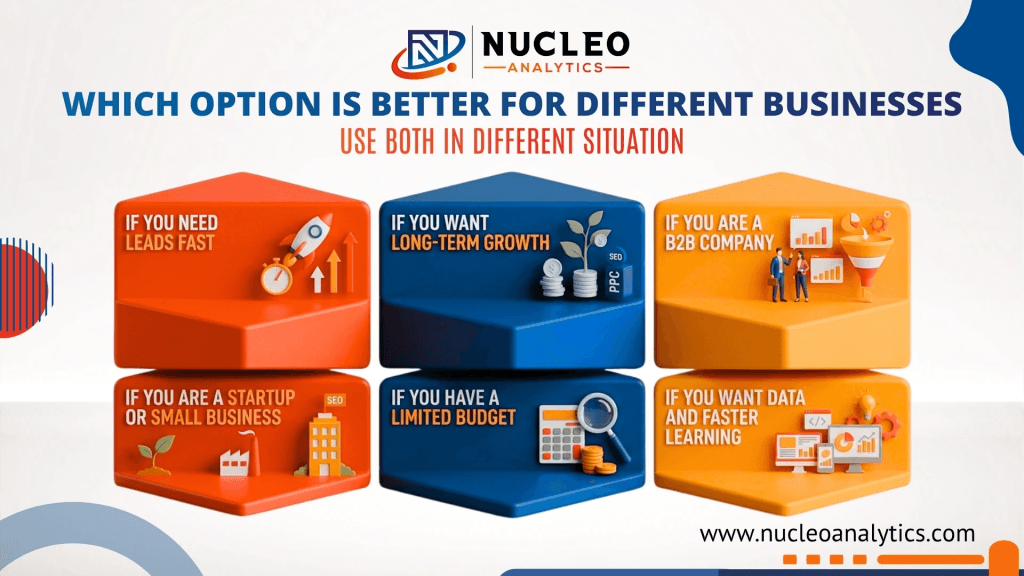
Now let us talk about real business scenarios. There is no one answer for everyone, but there are better options for different situations.
If You Need Leads Fast
If You Want Long-Term Growth
If You Are a Local Business
If You Are a B2B Company
If You Are a Startup or Small Business
If You Have a Limited Budget
If You Want Data and Faster Learning
Conclusion
SEO takes time. PPC delivers fast. One is built on trust, the other on attention. But they’re both about driving traffic, they’re both about generating leads. The difference is how they do it.
Growing a business is a marathon, not a sprint. SEO is a marathon. Quick fixes are a sprint. PPC is a sprint. The magic happens when you combine the two to reach the right audience at the right time for the right outcome.